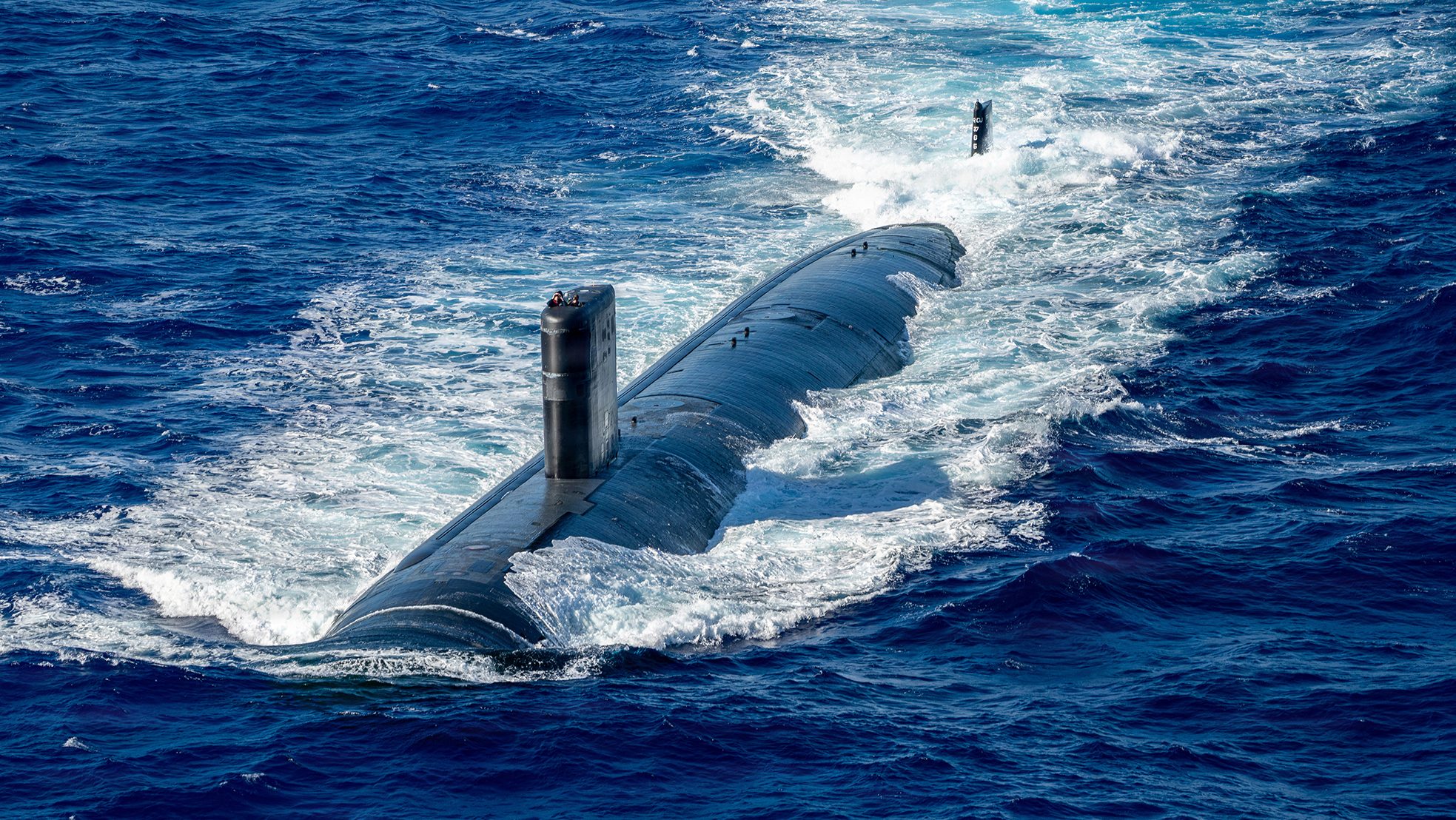
The U.S. military’s operations against Iran reached a new level of intensity on Tuesday when an American submarine torpedoed an Iranian warship in the Indian Ocean, marking the first time since 1945 that a Navy submarine had used a torpedo to sink an enemy vessel.
The explosion from the torpedo strike was so powerful that it briefly lifted the Iranian ship’s stern out of the water, a video of the attack released by the Defense Department shows.
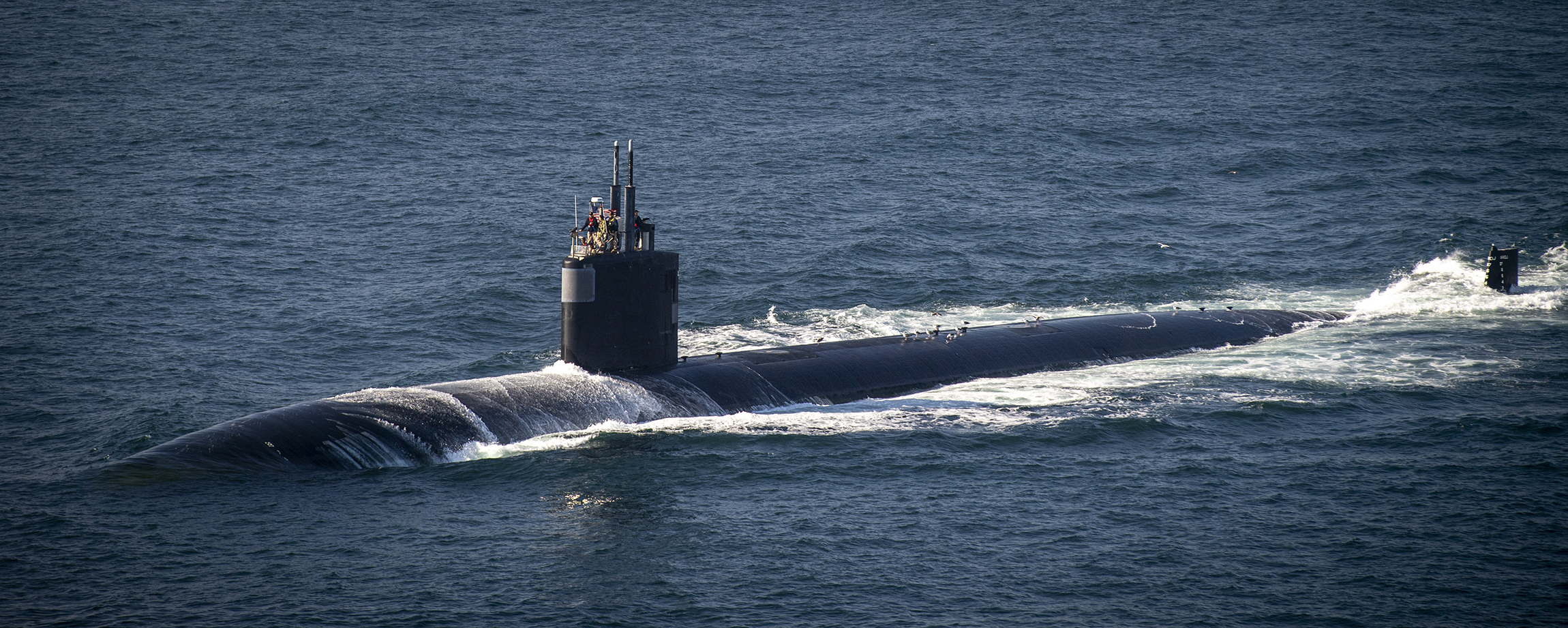
A U.S. official confirmed to Task & Purpose that a Los Angeles-class fast-attack submarine carried out the torpedo attack on the Iranian warship.
Retired Navy Capt. Thomas Shugart said he was not surprised that the U.S. nuclear submarine could strike with such impunity when ordered to do so, especially because the Iranian vessel likely did not have the technology needed to detect and destroy submarines, and it was operating far from home without any additional protection.
“This ship didn’t have a chance,” said Shugart, who served as a submariner from 1995 to 2020. “It probably had no idea the submarine was there. It had no way to see the weapon coming. It had no way to avoid it. The first thing that it knew there was a submarine around was when the back of the ship exploded, most likely.”
Top Stories This Week
Reuters first reported that the U.S. submarine had sunk the Iranian warship off the coast of Sri Lanka and that 101 people aboard were missing. Air Force Gen. Dan Caine, chairman of the Joint Chiefs of Staff, later told reporters on Wednesday that the American submarine had used a single Mark 48 torpedo in the attack.
It appears that the Iranian warship was equipped with long-range surface-to-air missiles, so using a submarine against it was probably less risky than attacking the ship with aircraft, Shugart said.
He added that the Mark 48 torpedo has a warhead that weighs 650 pounds, so any such attack would be likely to cause a high fatality rate among the crew.
“It is probably the most efficient way to sink a ship like that,” Shugart said. “It’s probably the most assured way to sink a ship like that, but it is also the most punishing way to sink a ship like that, and it’s clearly being done without regard to the loss of life.”
The Mark 48 torpedo itself is so much more advanced than what the Navy was using in 1945 that it is “barely even the same species” as its World War II counterparts, said James Holmes, the J. C. Wylie Chair of Maritime Strategy at the U.S. Naval War College in Newport, Rhode Island.
“Unlike the relatively slow, unguided torpedoes used against the Japanese, the Mark 48 can operate with or without wire guidance, it can home in on the target by active or passive means, and it can reengage the target multiple times if it misses,” Holmes told Task & Purpose. “Moreover, the Mark 48 is optimal for engaging enemy submarines, giving it a whole new operating dimension. Sub-on-sub combat was not really a thing during World War II.”
Although submarines are more powerful than ever, they have rarely been used to sink enemy warships since the end of World War II. In 1982, a British nuclear submarine sank the Argentine light cruiser ARA General Belgrano — formerly the USS Phoenix. And in 2010, a North Korean mini-submarine torpedoed and sank the South Korean corvette ROKS Cheonan.
One reason why it has been more than 80 years since a U.S. submarine torpedoed and sank an enemy vessel is that the Cold War between the United States and the Soviet Union never erupted into open conflict, said retired Navy Capt. Bent Sadler, who served as a submariner between 1994 and 2020.
The U.S. Navy has also not been tasked with attacking enemy commerce ships since the end of World War II, said Sadler, who is now with the Heritage Center think tank in Washington, D.C.
“There hasn’t really been a conflict that really merited going after an enemy’s navy with a torpedo,” Sadler told Task & Purpose. “You could just sink them from the air.”
This also marks a significant departure from the way submarines have been used for decades: as surveillance or deterrence assets. Now, with the sinking of an Iranian warship, they are again on the offensive, Sadler said.
Now, President Donald Trump has made it clear that he wants the U.S. military to sink the Iranian navy, and the torpedoing of that warship underscores that U.S. submarines are most effective when they go on offense and allowed to conduct operations independently.
“The strongest use of submarines is unleashing the captains of those boats with a set of orders: Go in this area and kill anything that meets the following conditions, and act as you see fit,” Sadlier said. “Independence, stealth and aggressiveness, that’s the best use of submarines, and I think you’re seeing some of that here.”
Task & Purpose Video