
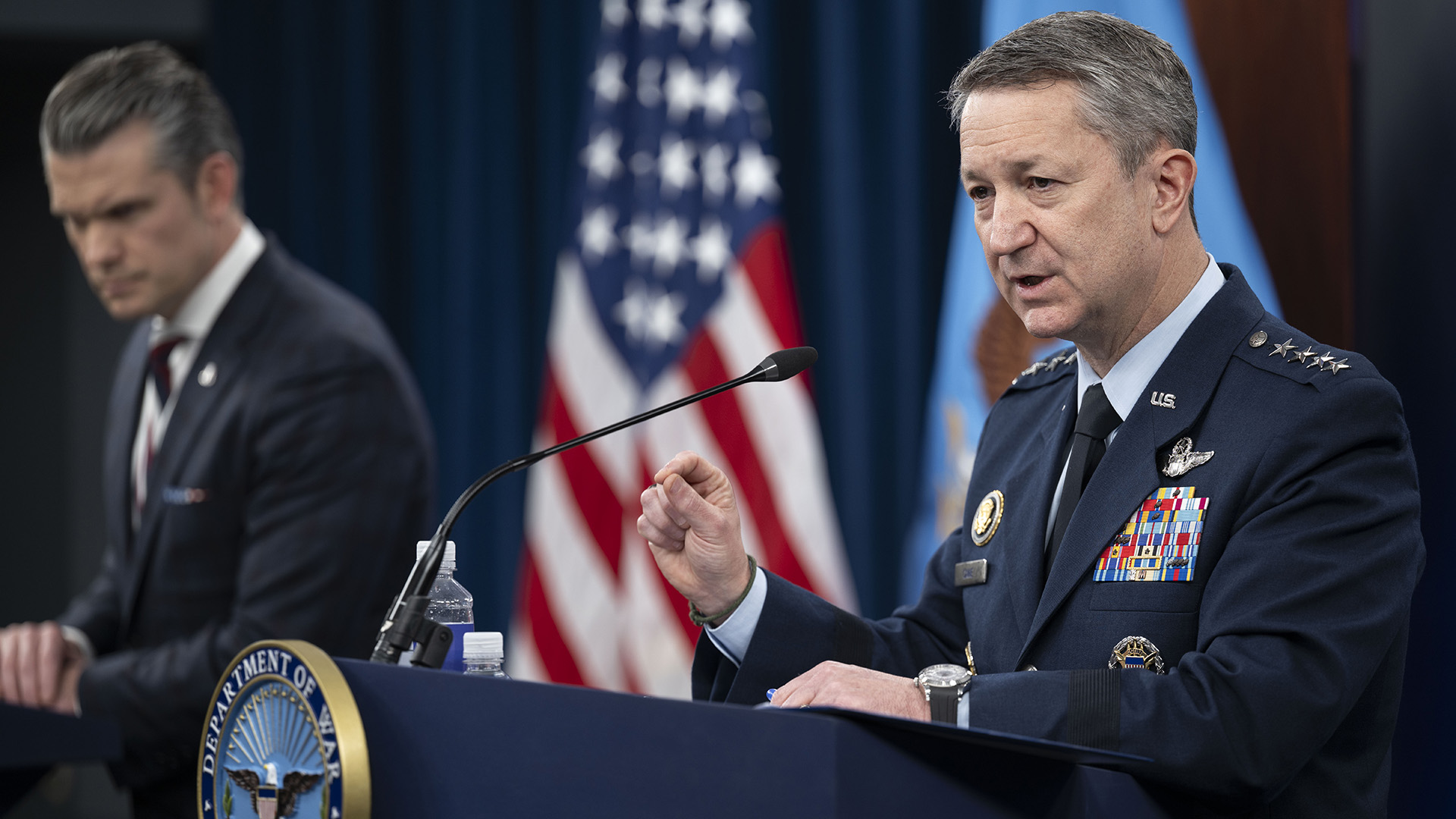
With the war against Iran in its second week, the U.S. military’s focus now includes destroying factories that build one-way attack drones and preventing the Iranian military from using sea mines, said Air Force Gen. Dan Caine, chairman of the Joint Chiefs of Staff.
“U.S [Central Command] continues today to hunt and strike mine-laying vessels in mine storage facilities,” Caine said during a Tuesday Pentagon news conference. “This work will continue.”
Caine did not specify exactly how many vessels, storage facilities, or sea mines have been destroyed so far.
Top Stories This Week
The operations targeting Iran’s ability to deploy sea mines come amid growing concern about Iranian threats to commercial shipping in the Strait of Hormuz, a vital waterway through which about 20% of the world’s oil flows.
Since U.S. and Israeli air and missile strikes against Iran began on Feb. 28, Iran has blockaded the strait for most ships and attacked at least 10 vessels trying to transit the waterway. In addition to its inventory of missiles and drones, Iran has an estimated stockpile of up to 6,000 sea mines, which it could use to try to close the Strait of Hormuz.
President Donald Trump has made keeping the Strait of Hormuz open a priority for U.S. government policy. In separate social media posts, Trump has threatened reprisals if Iran tried to impede the flow of oil through the strait, and he has also said the Navy could escort tankers through the waterway if needed.

The Destruction Of Iran’s Navy
[embedded content]
If the U.S. military is tasked with escorting ships through the Strait of Hormuz, defense officials would brief Trump and Defense Secretary Pete Hegseth on the required resources for such a mission, along with the potential risks, Caine said on Tuesday.
“So we’re looking at a range of options there, and we’ll figure out how to solve problems as they come to us,” Caine said.
On Feb. 28, the U.S. military began air and missile strikes on Iran as part of Operation Epic Fury. Iran has retaliated by firing thousands of drones at U.S. partner nations throughout the Middle East. To date, there have been seven U.S. military deaths as a result of separate Iranian strikes.
Throughout the conflict, U.S. forces and regional partners have been using fighter aircraft and attack helicopters to destroy Iranian drones, Caine said on Tuesday.
Now, U.S. strikes have also begun to target parts of Iran’s military-industrial complex involved with building one-way attack drones, he said.
So far, U.S. forces have attacked several factories that make the drones “to get at the heart of their autonomous capability,” Caine said. He did not elaborate on the number of factories struck or how badly they were damaged.
“We continue to start working on and going deeper into Iran’s military and industrial base in order to prevent the regime from being able to attack Americans, our interests, and our partners for years to come and project power outside their borders, “ Caine said.

Task & Purpose Video